
Is to strengthen science communities in the hemisphere and to provide an independent source of policy advice to governments on key scientific, technological and health challenges.
About IANAS
IANAS is a regional network of Academies of Sciences created to support cooperation towards the strengthening of science and technology as a tool for advancing research and development, prosperity and equity in the Americas.
ABOUT IANAS
IANAS plays a major role in contributing to the promotion
of scientific capacity and excellence for sustainable development in the Americas.
Networks are powerful instruments for sharing and rapidly disseminating information, best practices and novel ideas through a larger community. By virtue of their credibility and independence from government, Academies have certain inherent advantages in addressing issues related to science, technology and health (STH), and in advancing high quality science education at the national level.

Our Objectives
Our mission
Our Vision
IANAS views strong science academies and vibrant science and technology communities as essential to sustainable development in the Americas.
IANAS Governance

Co-chair
Karen B. Strier
Co-chair
Dr. Karen B. Strier is Vilas Research Professor and Irven DeVore Professor of Anthropology at the University of Wisconsin-Madison. She earned her PhD from Harvard University, and is an international authority on the endangered northern muriqui monkey, which she has been studying in the Brazilian Atlantic Forest since 1982. She has trained more than 90 Brazilian students on her project.
She served as president of the International Primatological Society from 2016-2022. She is a member of the U.S. National Academy of Sciences (NAS), the American Academy of Arts and Sciences, and a fellow of the American Association for the Advancement of Sciences. She has chaired committees and served in leadership roles within these and other professional societies. As chair of the Temporary Nominating Group in her NAS class, she worked to increase diversity in the membership of NAS. She also served two 3-year terms on the Board of International Scientific Organizations (BISO), also within NAS.
A distinguished primatologist and conservationist, she has received numerous awards including the Distinguished Primatologist Award from the American Society of Primatology, Honorary Lifetime memberships in the Sociedade Brasliera de Primatologia and the Sociedade Latin Americana de Primatologia, an Honorary Doctorate of Sciences from the University of Chicago, the Prêmio Muriqui from the Conselho Nacional da Reserva Biosfera da Mata Atlantica, and the Excellence in Primate Conservation Award from the Margot Marsh Biodiversity Foundation. Her pioneering, long-term field research has been critical to conservation efforts on behalf of the muriqui, and has been influential in shaping comparative perspectives on primate behavioral and ecological diversity more broadly.
Co-Chair
Alberto Gago
Co-Chair
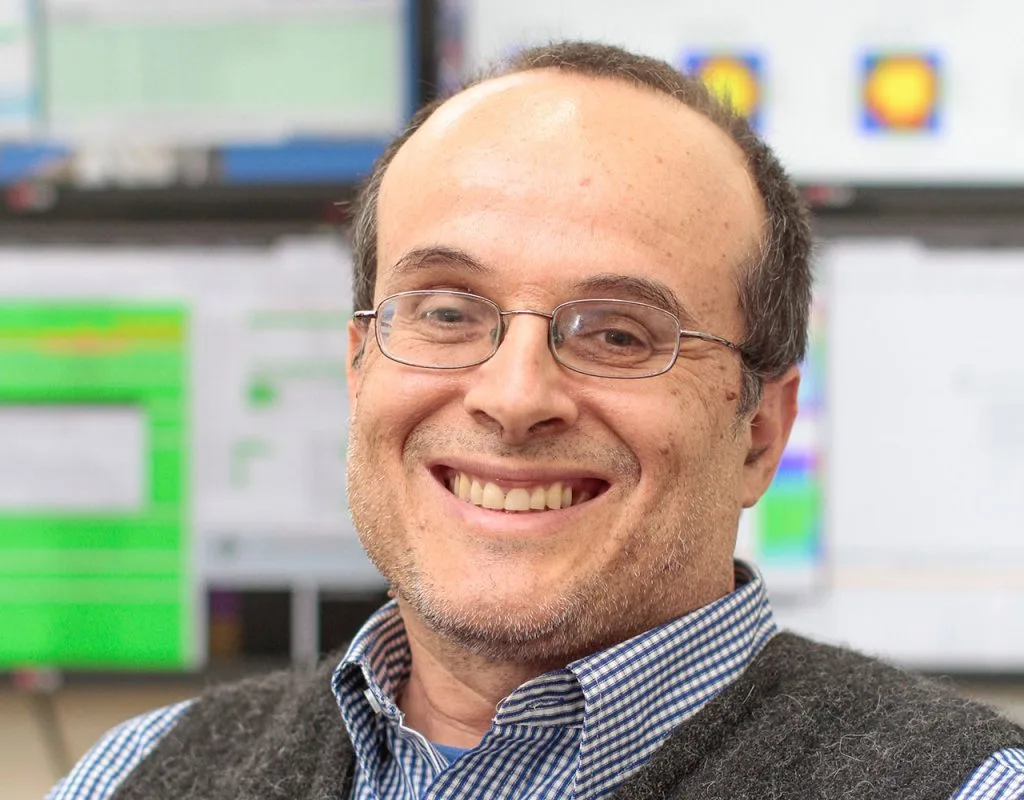
Alberto Gago Medina is a physicist at the Pontificia Universidad Católica del Perú (PUCP) and holds a PhD in Science from the University of São Paulo (Brazil). His research focuses on subatomic or elementary particle physics, encompassing both experimental and theoretical-phenomenological approaches. He leads the PUCP High Energy Physics Group, which has participated in the ALICE experiment at CERN since 2009 and in the MINERvA experiment at Fermilab since 2006, contributing to the development and international integration of high-energy physics research in Peru and Latin America. He has supervised nearly twenty postgraduate theses and led numerous national and international research projects. Further information on his research activities and those of his group can be found on the High Energy Physics Group webpage and in the introductory video available on the site.
His scientific work also addresses fundamental questions related to physics beyond the Standard Model and the interface between theory and experiment. He plays an active role in the regional organization and strategic planning of high-energy physics as a member of the International Organizing Committee of the CERN–Latin American School of High-Energy Physics and of the Latin American Symposium of High Energy Physics, and as a participant in the Preparatory Group of the Latin American Strategy for High Energy, Cosmology, and Astroparticle Physics.
Beyond his academic activities, he has assumed prominent leadership roles in science governance and public policy. He served as President of the National Academy of Sciences of Peru from 2021 to 2024 and was reelected for the 2024–2027 term, currently serving as its President. He is also a member of the Advisory Commission on Science, Technology, and Innovation and has previously served on the National Council of Education. His contributions have been recognized with several distinctions, including the Elsevier Award for Excellence in Physical Sciences – Peru (2017) and the TWAS–ANCYT Award for Young Scientists in Basic Sciences (2004), as well as national recognition from the Commission on Science, Innovation, and Technology of the Congress of the Republic of Peru. He is currently Director of the PhD Program in Physics and a senior professor in the Physics Section of the Department of Sciences at PUCP.
IANAS Bylaws
The Academies of Sciences of the countries of the Americas, in the spirit of the InterAcademy Partnership (IAP), established an Inter-American Network of Academies of Sciences, IANAS.
The main goals of IANAS are: